Welcome to hackvshack.net Forum!
Download Free HvH CS2/CS:GO Cheats, CFG, LUA/JS Scripts, and More!
Register

Article The End of HvH Gold Era

The End of HVH as we knew it​

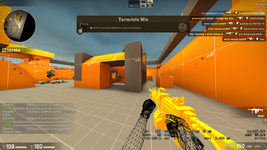
There was a time when HVH wasn’t just a mode — it was the game inside the game. You didn’t queue to win rounds, you queued to outplay someone else’s config, break their resolver, and prove your cheat was simply better. Every duel felt like a statement. Every lobby had a name you recognized.
1778009333801.png

But somewhere along the way, that feeling started fading. What used to be unpredictable turned scripted. What used to be skill (or at least interpreted skill) turned into repetition. Same peeks, same exploits, same outcomes. You could load into five different matches and barely tell the difference. And now with CS2 fully taking over, it’s hard to ignore what’s right in front of us: HVH didn’t evolve — it stalled. And while it was standing still, something else quietly took its place.

What HVH Really Was​

If you were actually part of the scene, you know HVH was never about “cheating to win.” It was about breaking the other guy’s logic before he broke yours. At its core, HVH was a layered interaction between systems — anti-aim vs resolver, fakelag vs prediction, doubletap timing vs server state. You weren’t just shooting; you were forcing desyncs, baiting shots, abusing tick behavior, and hoping your configuration held up under pressure. There were two clear mentalities:
  • Rage — push everything to the limit, overwhelm the opponent’s resolver, win trades through brute-force mechanics
  • Legit (within HVH context) — still aggressive, but more controlled, relying on positioning and timing rather than full send exploits
And then there were the mechanics everyone pretended to fully understand:
anti-aim builders, resolver logic, hitchance tuning, fakelag manipulation — half science, half placebo. That’s what made HVH addictive. Not the kills, but the uncertainty. Every miss had a reason. Every hit felt “earned,” even when it wasn’t. But that complexity — the very thing that built HVH — is also what started tearing it down.

The Golden Era of HvH — When configs mattered more than Cheats​

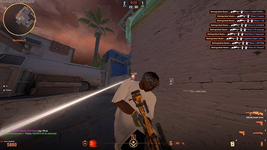
According to the WH-SATANO community, there was a window — roughly late 2017 to early 2020 — where HVH actually felt alive.
1778009357772.png

Not “active,” not “popular,” but alive. You could load into a server and instantly recognize patterns: who was running what, who had a solid config, who just bought a paste and hoped for the best. Names carried weight back then. Not just the cheat, but the player behind it. Sure, people argued about what was “best.” Some swore by Gamesense (Skeet cheat), others leaned toward Neverlose cheat, while Fatality cheat, Onetap cheat, and Aimware cheat all had their moments. But here’s the thing most people outside the scene never understood: The cheat didn’t carry you — your config did. Two players could run the same build and have completely different results. Resolver tweaks, anti-aim presets, timing adjustments — all of it mattered. And if you actually knew what you were doing, you could outplay someone with a “better” cheat just by understanding how they were set up. That’s what made HVH competitive in its own twisted way. It wasn’t balanced. It wasn’t fair. But it wasn’t predictable either — and that’s exactly why people stayed.

Why HVH Started Dying​

The problem wasn’t that HVH got worse overnight — it’s that it slowly optimized itself into something sterile. Every major mechanic got pushed to its limit. Anti-aim became more about presets than creativity. Resolvers turned into constant patch cycles instead of actual understanding. Doubletap timing, fakelag abuse, defensive configs — everything started converging into the same few “working” solutions. And once a meta stabilizes that hard, it stops being a game. It becomes repetition.

1778009381618.png

You’d peek the same angles, force the same desync, rely on the same exploits — and so would everyone else. Fights weren’t decided by adaptation anymore, but by whose config aligned better with the current patch cycle. Even the “mind games” disappeared. There’s no mind game when both players already know the script. On top of that, the barrier to entry dropped in the worst possible way. Configs got shared, free, sold. What used to take weeks of tweaking became something you could download in five minutes. The gap between experienced players and newcomers didn’t disappear — it just became less interesting. And the community felt it. By around 2021, people weren’t chasing improvement anymore — they were chasing updates. Waiting for fixes, new builds, better resolvers. Playing less, tweaking more. HVH didn’t collapse because it was broken. It collapsed because it became solved — or at least, solved enough to stop being fun.

CS2 Shift — New Engine, New Meta​

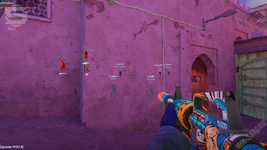
When Undetected CS2 Cheats replaced Counter-Strike: Global Offensive Cheats, a lot of people expected HVH to just “carry over” with minor adjustments. That didn’t happen.
1778009413928.png

Source 2 didn’t just upgrade visuals — it changed how the game feels at a fundamental level. Movement, hit registration, subtick timing — all of it behaves differently enough to break the assumptions HVH relied on for years. Old anti-aim logic? Inconsistent. Resolvers? Way less reliable. Classic exploits? Either gone, unstable, or not worth forcing. What used to be a tightly optimized system in CS:GO suddenly felt… off. Not necessarily worse — just unpredictable in the wrong way. Instead of outplaying your opponent’s setup, you were often fighting the engine itself. And that’s a critical difference. HVH in CS:GO thrived on controlled chaos — mechanics were broken, but understood. In CS2, that understanding isn’t there yet — and some parts may never return in the same form. So the question shifted: If you can’t rely on forcing the game to break in your favor anymore… what’s the next best way to stay ahead?

Rise of Legit — The New Dominant Playstyle​

While a lot of people were still trying to “fix” HVH for CS2, something else started gaining traction — quietly at first, then all at once. Legit.

Not the old definition people used to throw around in CS:GO, but a refined version built specifically for CS2’s environment. Less about domination, more about control. Less about breaking the game, more about blending into it. And it works — for a few very simple reasons. First, subtlety beats force in CS2. The engine doesn’t reward extreme abuse the same way anymore, but it does allow small advantages to stack. A slight aim assist, a clean trigger, controlled recoil — these things add up without drawing attention. Second, survivability matters more than highlight plays. In Premier and high-rank matchmaking, staying undetected is more valuable than winning one flashy duel. Legit setups let you play longer sessions, climb consistently, and avoid unnecessary risk. Third, the gameplay actually feels closer to real skill. You’re still positioning, still reading opponents, still taking fights — just with an edge that doesn’t scream “cheat.” And for a lot of players, that’s more satisfying than trading shots in a scripted HVH loop. You can also see it in content.

Instead of raw HVH clips, the shift moved toward “clean” gameplay — stream highlights, subtle outplays, moments where you can’t quite tell what’s happening. That ambiguity is part of the appeal now. And maybe the biggest change:
  • People stopped trying to prove they’re stronger.
  • Now they’re trying to prove they’re smarter — or at least harder to detect.
That’s the space legit fills perfectly.

Not a Trend — A New Standard​

At first, a lot of people treated legit in CS2 like a temporary phase — something that would fade once HVH “caught up”. It didn’t. If anything, the opposite happened. Through 2024 and into 2025, legit didn’t spike — it stabilized. No sudden explosions, no dramatic shifts, just a steady increase in adoption across matchmaking, Premier, and even former HVH-heavy communities. And that kind of growth is different. Trends peak and drop. Metas shift and get replaced. But when a playstyle becomes the default choice for long-term consistency, it stops being a trend. It becomes infrastructure. That’s where legit sits right now. Not as an alternative to HVH — but as the baseline most players are building around. And once something reaches that point, it’s very hard to push it out of the meta.

Midnight CS2 Case — Example of a Modern Legit Tool​

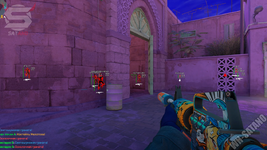
One of the clearer examples of that shift is Midnight CS2 cheat — not because it tries to outdo classic HVH tools, but because it doesn’t. Instead of forcing aggressive mechanics into CS2, it’s built around the idea that consistency and control matter more than raw output.
1778009450941.png

The first thing you notice is how the aim behaves. It’s not designed to snap or dominate — it’s designed to assist. Smooth transitions, adjustable FOV, weapon-specific tuning — everything is focused on staying within believable limits. You can push it further if you want, but the default philosophy is clearly legit-first. That same logic carries into the rest of the system. Visual features like ESP and wallhack aren’t overloaded with unnecessary data. Clean information, readable overlays, no clutter — just enough to give you awareness without turning your screen into noise. And in CS2, where visibility and pacing matter more, that minimalism actually helps. Then there’s usability. Instead of spending hours tweaking dozens of overlapping settings, you get structured configs and presets that make sense. You can fine-tune if you know what you’re doing, but you’re not forced into it just to get decent performance. And importantly, everything is built with discretion in mind. Panic key, controlled behavior, no obvious “rage” signatures — the goal isn’t to stand out, it’s to stay in control over longer sessions without drawing attention. That’s really the difference. Tools like this aren’t trying to revive HVH. They’re aligned with what CS2 actually rewards now — subtle advantage, stable performance, and staying under the radar.

End of Rage, Era of Subtle Control​

HVH isn’t gone in the literal sense — you can still find servers, still run the same setups, still chase that old feeling. But it’s no longer driving the scene. What used to define the meta is now just one of many niches. The core has shifted. With Counter-Strike 2, the advantage doesn’t come from forcing the game to break — it comes from understanding where it bends. The players who adapted stopped looking for maximum output and started optimizing for consistency, longevity, and control. That’s why legit isn’t replacing HVH — it already did. Not with a bang, but gradually, as the more practical option. And if there’s one takeaway from all of this, it’s simple: In the current meta, the most effective player isn’t the most aggressive one. It’s the one you can’t clearly identify.
 

The End of HVH as we knew it​

There was a time when HVH wasn’t just a mode — it was the game inside the game. You didn’t queue to win rounds, you queued to outplay someone else’s config, break their resolver, and prove your cheat was simply better. Every duel felt like a statement. Every lobby had a name you recognized.

1778009333801.png

But somewhere along the way, that feeling started fading. What used to be unpredictable turned scripted. What used to be skill (or at least interpreted skill) turned into repetition. Same peeks, same exploits, same outcomes. You could load into five different matches and barely tell the difference. And now with CS2 fully taking over, it’s hard to ignore what’s right in front of us: HVH didn’t evolve — it stalled. And while it was standing still, something else quietly took its place.

What HVH Really Was​

If you were actually part of the scene, you know HVH was never about “cheating to win.” It was about breaking the other guy’s logic before he broke yours. At its core, HVH was a layered interaction between systems — anti-aim vs resolver, fakelag vs prediction, doubletap timing vs server state. You weren’t just shooting; you were forcing desyncs, baiting shots, abusing tick behavior, and hoping your configuration held up under pressure. There were two clear mentalities:
  • Rage — push everything to the limit, overwhelm the opponent’s resolver, win trades through brute-force mechanics
  • Legit (within HVH context) — still aggressive, but more controlled, relying on positioning and timing rather than full send exploits
And then there were the mechanics everyone pretended to fully understand:
anti-aim builders, resolver logic, hitchance tuning, fakelag manipulation — half science, half placebo. That’s what made HVH addictive. Not the kills, but the uncertainty. Every miss had a reason. Every hit felt “earned,” even when it wasn’t. But that complexity — the very thing that built HVH — is also what started tearing it down.

The Golden Era of HvH — When configs mattered more than Cheats​

According to the WH-SATANO community, there was a window — roughly late 2017 to early 2020 — where HVH actually felt alive.

1778009357772.png

Not “active,” not “popular,” but alive. You could load into a server and instantly recognize patterns: who was running what, who had a solid config, who just bought a paste and hoped for the best. Names carried weight back then. Not just the cheat, but the player behind it. Sure, people argued about what was “best.” Some swore by Gamesense (Skeet cheat), others leaned toward Neverlose cheat, while Fatality cheat, Onetap cheat, and Aimware cheat all had their moments. But here’s the thing most people outside the scene never understood: The cheat didn’t carry you — your config did. Two players could run the same build and have completely different results. Resolver tweaks, anti-aim presets, timing adjustments — all of it mattered. And if you actually knew what you were doing, you could outplay someone with a “better” cheat just by understanding how they were set up. That’s what made HVH competitive in its own twisted way. It wasn’t balanced. It wasn’t fair. But it wasn’t predictable either — and that’s exactly why people stayed.

Why HVH Started Dying​

The problem wasn’t that HVH got worse overnight — it’s that it slowly optimized itself into something sterile. Every major mechanic got pushed to its limit. Anti-aim became more about presets than creativity. Resolvers turned into constant patch cycles instead of actual understanding. Doubletap timing, fakelag abuse, defensive configs — everything started converging into the same few “working” solutions. And once a meta stabilizes that hard, it stops being a game. It becomes repetition.

1778009381618.png

You’d peek the same angles, force the same desync, rely on the same exploits — and so would everyone else. Fights weren’t decided by adaptation anymore, but by whose config aligned better with the current patch cycle. Even the “mind games” disappeared. There’s no mind game when both players already know the script. On top of that, the barrier to entry dropped in the worst possible way. Configs got shared, free, sold. What used to take weeks of tweaking became something you could download in five minutes. The gap between experienced players and newcomers didn’t disappear — it just became less interesting. And the community felt it. By around 2021, people weren’t chasing improvement anymore — they were chasing updates. Waiting for fixes, new builds, better resolvers. Playing less, tweaking more. HVH didn’t collapse because it was broken. It collapsed because it became solved — or at least, solved enough to stop being fun.

CS2 Shift — New Engine, New Meta​

When Undetected CS2 Cheats replaced Counter-Strike: Global Offensive Cheats, a lot of people expected HVH to just “carry over” with minor adjustments. That didn’t happen.

1778009413928.png

Source 2 didn’t just upgrade visuals — it changed how the game feels at a fundamental level. Movement, hit registration, subtick timing — all of it behaves differently enough to break the assumptions HVH relied on for years. Old anti-aim logic? Inconsistent. Resolvers? Way less reliable. Classic exploits? Either gone, unstable, or not worth forcing. What used to be a tightly optimized system in CS:GO suddenly felt… off. Not necessarily worse — just unpredictable in the wrong way. Instead of outplaying your opponent’s setup, you were often fighting the engine itself. And that’s a critical difference. HVH in CS:GO thrived on controlled chaos — mechanics were broken, but understood. In CS2, that understanding isn’t there yet — and some parts may never return in the same form. So the question shifted: If you can’t rely on forcing the game to break in your favor anymore… what’s the next best way to stay ahead?

Rise of Legit — The New Dominant Playstyle​

While a lot of people were still trying to “fix” HVH for CS2, something else started gaining traction — quietly at first, then all at once. Legit.

Not the old definition people used to throw around in CS:GO, but a refined version built specifically for CS2’s environment. Less about domination, more about control. Less about breaking the game, more about blending into it. And it works — for a few very simple reasons. First, subtlety beats force in CS2. The engine doesn’t reward extreme abuse the same way anymore, but it does allow small advantages to stack. A slight aim assist, a clean trigger, controlled recoil — these things add up without drawing attention. Second, survivability matters more than highlight plays. In Premier and high-rank matchmaking, staying undetected is more valuable than winning one flashy duel. Legit setups let you play longer sessions, climb consistently, and avoid unnecessary risk. Third, the gameplay actually feels closer to real skill. You’re still positioning, still reading opponents, still taking fights — just with an edge that doesn’t scream “cheat.” And for a lot of players, that’s more satisfying than trading shots in a scripted HVH loop. You can also see it in content.

Instead of raw HVH clips, the shift moved toward “clean” gameplay — stream highlights, subtle outplays, moments where you can’t quite tell what’s happening. That ambiguity is part of the appeal now. And maybe the biggest change:
  • People stopped trying to prove they’re stronger.
  • Now they’re trying to prove they’re smarter — or at least harder to detect.
That’s the space legit fills perfectly.

Not a Trend — A New Standard​

At first, a lot of people treated legit in CS2 like a temporary phase — something that would fade once HVH “caught up”. It didn’t. If anything, the opposite happened. Through 2024 and into 2025, legit didn’t spike — it stabilized. No sudden explosions, no dramatic shifts, just a steady increase in adoption across matchmaking, Premier, and even former HVH-heavy communities. And that kind of growth is different. Trends peak and drop. Metas shift and get replaced. But when a playstyle becomes the default choice for long-term consistency, it stops being a trend. It becomes infrastructure. That’s where legit sits right now. Not as an alternative to HVH — but as the baseline most players are building around. And once something reaches that point, it’s very hard to push it out of the meta.

Midnight CS2 Case — Example of a Modern Legit Tool​

One of the clearer examples of that shift is Midnight CS2 cheat — not because it tries to outdo classic HVH tools, but because it doesn’t. Instead of forcing aggressive mechanics into CS2, it’s built around the idea that consistency and control matter more than raw output.

1778009450941.png

The first thing you notice is how the aim behaves. It’s not designed to snap or dominate — it’s designed to assist. Smooth transitions, adjustable FOV, weapon-specific tuning — everything is focused on staying within believable limits. You can push it further if you want, but the default philosophy is clearly legit-first. That same logic carries into the rest of the system. Visual features like ESP and wallhack aren’t overloaded with unnecessary data. Clean information, readable overlays, no clutter — just enough to give you awareness without turning your screen into noise. And in CS2, where visibility and pacing matter more, that minimalism actually helps. Then there’s usability. Instead of spending hours tweaking dozens of overlapping settings, you get structured configs and presets that make sense. You can fine-tune if you know what you’re doing, but you’re not forced into it just to get decent performance. And importantly, everything is built with discretion in mind. Panic key, controlled behavior, no obvious “rage” signatures — the goal isn’t to stand out, it’s to stay in control over longer sessions without drawing attention. That’s really the difference. Tools like this aren’t trying to revive HVH. They’re aligned with what CS2 actually rewards now — subtle advantage, stable performance, and staying under the radar.

End of Rage, Era of Subtle Control​

HVH isn’t gone in the literal sense — you can still find servers, still run the same setups, still chase that old feeling. But it’s no longer driving the scene. What used to define the meta is now just one of many niches. The core has shifted. With Counter-Strike 2, the advantage doesn’t come from forcing the game to break — it comes from understanding where it bends. The players who adapted stopped looking for maximum output and started optimizing for consistency, longevity, and control. That’s why legit isn’t replacing HVH — it already did. Not with a bang, but gradually, as the more practical option. And if there’s one takeaway from all of this, it’s simple: In the current meta, the most effective player isn’t the most aggressive one. It’s the one you can’t clearly identify.
best era was when i joined as a 2024 newcomer $$$$$$
 
holy ai slop ..btw cs2 hvh isnt hvh at all its litreally shit eating contest lolol only good hvh is 2018 and maybe 2020 but idk
 
  • Like
Reactions: hvher123

Who has read this thread (Total: 3) in last 1 hours View details