Welcome to hackvshack.net Forum!
Download Free HvH CS2/CS:GO Cheats, CFG, LUA/JS Scripts, and More!
Register

Cheat Femboyloose anti aim

r9tzer__sigma

Newbie HvHer
User ID:
249735
Messages:
6
Reactions:
1
Badges:
2
REP:
−0/0+
Level:
19
So im kinda new to configing cheats and i was wondering for the anti aim for csgo 2023 femboyloose what the diffrence between down fake down and fake up cause i dont know whats best and what the diffrence is
 
So im kinda new to configing cheats and i was wondering for the anti aim for csgo 2023 femboyloose what the diffrence between down fake down and fake up cause i dont know whats best and what the diffrence is
CSGO in 2023 was still a period when desync-based anti-aim was in use. The general idea was to manipulate the networked view and animation state so that there was a discrepancy between the player’s actual orientation and the orientation presented to other clients. It was often described as the “real” and “fake” angles. A resolver would then attempt to determine the opponent’s actual hitbox position, not animation, since the whole point of anti-aim is to separate the hitbox from the animation by manipulating the network view and animation states.

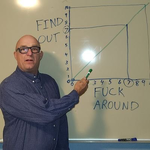
Therefore, whether a particular anti-aim option is preferable depends on what you are trying to achieve and, more importantly, on how that specific cheat implements the anti-aim function (devs can be very bad, it was a time without AI, so devs would paste a lot without thinking, today we call it vibe coding). For example, if a “fake up” pitch configuration occasionally exposes or flicks the real angle upward as part of its anti-aim logic, a good resolver could potentially recognize that pattern, and then this “fake up” will be seen as “real up” a.k.a. a free kill. Thus, “fake down” might therefore appear to be a more reasonable option, but then nothing will be exposed to the enemy, so there will be a smaller chance of the enemy dumping our fake angle. In summary, gosh around and find out.
1787793027519.webp
 
CSGO in 2023 was still a period when desync-based anti-aim was in use. The general idea was to manipulate the networked view and animation state so that there was a discrepancy between the player’s actual orientation and the orientation presented to other clients. It was often described as the “real” and “fake” angles. A resolver would then attempt to determine the opponent’s actual hitbox position, not animation, since the whole point of anti-aim is to separate the hitbox from the animation by manipulating the network view and animation states.

Therefore, whether a particular anti-aim option is preferable depends on what you are trying to achieve and, more importantly, on how that specific cheat implements the anti-aim function (devs can be very bad, it was a time without AI, so devs would paste a lot without thinking, today we call it vibe coding). For example, if a “fake up” pitch configuration occasionally exposes or flicks the real angle upward as part of its anti-aim logic, a good resolver could potentially recognize that pattern, and then this “fake up” will be seen as “real up” a.k.a. a free kill. Thus, “fake down” might therefore appear to be a more reasonable option, but then nothing will be exposed to the enemy, so there will be a smaller chance of the enemy dumping our fake angle. In summary, gosh around and find out.
1787793027519.webp
yeah il try it out a bit
 
  • Like
Reactions: Plisskien

Who has read this thread (Total: 0) in last 1 hours View details